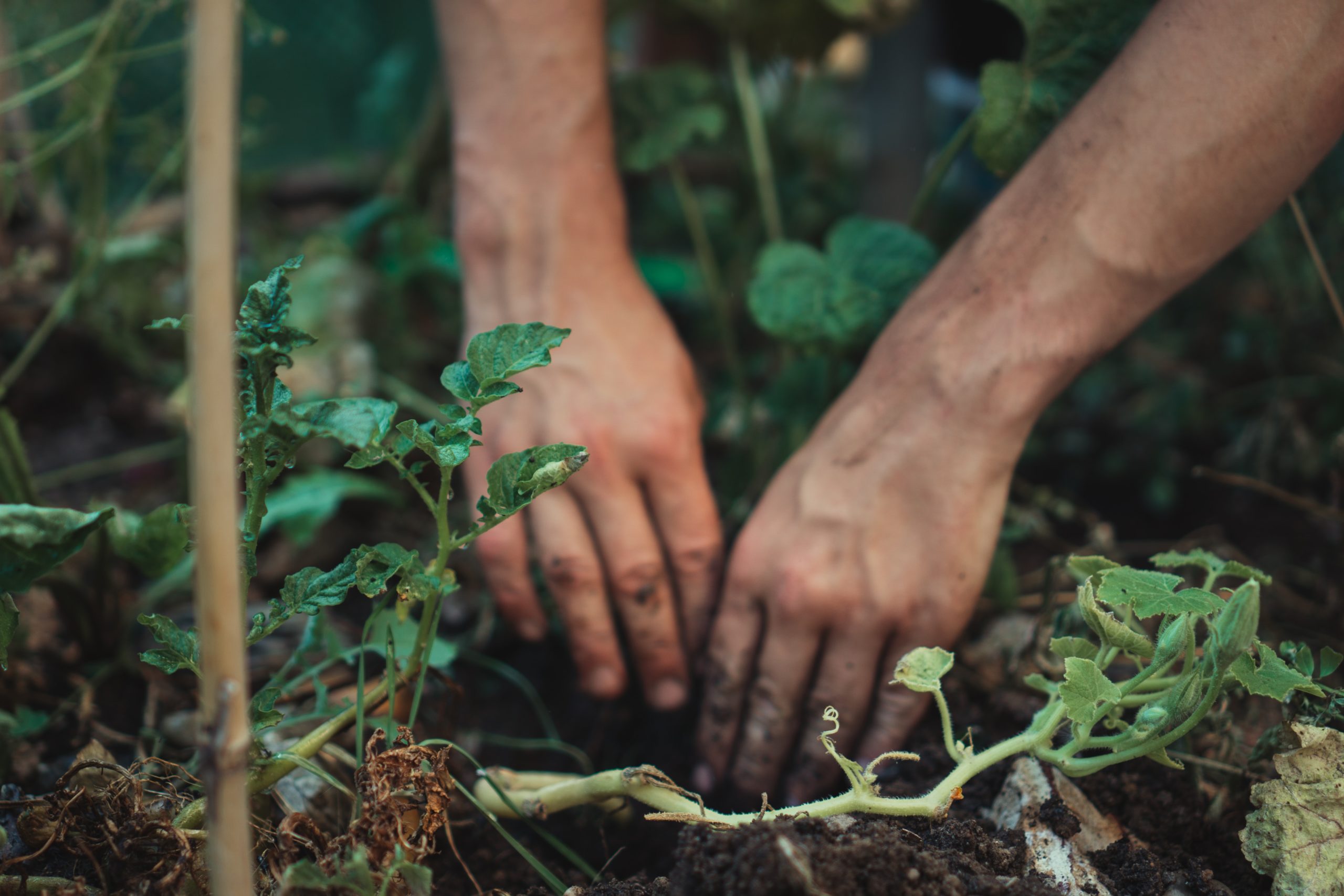
This week, Joel and I took a morning to weed our back gardens. Between a number of rainy days and busy weeks, some of the weeds were a bit out of control. We had a pokeweed plant that had grown to more than three metres tall, with branches more than three centimetres in diameter! Plus, the few times we sat out to eat dinner on the back deck, all I could see were the weeds taking over my irises and dear clematis. The weeds were ruining the pleasure of being in the backyard. It was time to pull, uproot, and kill all the weeds!
As I crawled around in the dirt and mulch, I got to thinking about weeding in our souls. I’m sure you’ve heard weeding used as a metaphor for taking care of the sins that crop up in the garden of your heart. If you’ve done any kind of gardening, you know how apropos this figure is. Sins are as prevalent as weeds, seem to come up overnight, and require just as much regular and constant attention to keep at bay as weeds. The worst part is that, like sin, weeds will always be the bane of a gardener’s garden. Until Jesus comes back and the presence of sin is destroyed, both weeds and sin will exist.
But that’s not actually what I was thinking about while I plucked and pulled and tugged at the tiny and not-so-tiny annoyances in the ground.
Another Lesson From My Garden
What struck me was that there are two reasons a person will weed the garden. The first is because you have to; you know that if you don’t care for the weeds while they are small, they will eventually choke out the plants. The second is because you take great delight in the care of the garden and know how much more beautiful the space is when it isn’t full of weeds.
This is true of our obedience too. Lots of times, we have to confess and repent from the small and not-so-small sins in our lives because we know, rightfully so, that if we don’t take care, these sins will root themselves down and cause hard, unbelieving hearts. Acts 8:9-25 records an encounter of Peter and John with the magician Simon who, upon seeing the miraculous works the apostles are performing, offers Peter and John money so that he can have this power too. Peter says to him, “Repent, therefore of this wickedness of yours, and pray to the Lord that, if possible, the intent of your heart may be forgiven you. For I see that you are in the gall of bitterness and in the bond of iniquity” (verse 22-23). Very quickly, Simon’s sin of covetousness grew in bitterness and trapped him in the bond of iniquity. Repentance was the way to kill that aggressive weed.
And other times, our hearts desire to be free from sin because we know how much it sullies our souls. We desire purity because we know the blessing of walking in the Lord’s ways. In Psalm 119, David expresses his great delight in doing things God’s way. In the second section, Beth, verses 9-16, it is clear that his intention for weeding the garden of his heart is great blessing and a delight in obedience: “How can a young man keep his way pure? By guarding it according to your word” (verse 9), “With my whole heart I seek you” (verse 10), “Blessed are you, O Lord; teach me your statutes!” (verse 12), “With my lips I declare all the rules of your mouth” (verse 13). Clearly David desires obedience because it pleases the Lord!
It probably is safe to say that while both reasons are Biblical and both have their place in the life of a believer, the second requires a stronger hate than the first. In the first case, we hate sin because it alters our ability to function in the kingdom. In the second, we hate sin because it alters our ability to experience and enjoy God.
Either way, how does one learn to hate sin?
First, Remember What God Says
Psalm 119:16 tells us that the way we learn to take delight in obedience is by not forgetting what God has said. We “store up [His] word in [our hearts]” (Psalm 119:11), we “meditate on [His] precepts and fix [our eyes] on [His] ways” (Psalm 119:15). We turn our minds and thoughts and the eyes of our hearts to what He has spoken in His word, the Bible. This means taking time to read it and think about it. The Christian who is growing in his hatred of sin is a Christian who is regularly reading and thinking about the scriptures.
Second, Ask God For Understanding
As David reminds us, the Word is His word. Therefore, we need His help to understand it. Notice how David pleads with God to not let him wander from His commandments (verse 10), and to teach him His statutes (verse 12). Like David, we must beg God to help us understand His motives, thoughts, and intentions so we can love Him more than our sin. This means taking time to pray over our own hearts, asking God to reveal the “thoughts and intentions of the heart” (Hebrews 4:12) because our hearts are “desperately sick; who can understand” them? (Jeremiah 17:9) The Christian who is growing in his hatred is a Christian who is regularly pleading with God to change and regenerate his heart.
Hope For the Weary
Perhaps you find yourself really weary of all the time you’ve spent on your knees pulling out stubborn weeds or battling weeds that have grown far too large. Perhaps you’re exhausted from the battle of hating sin. There’s hope here too.
Ultimately, it is Jesus Himself that empowers you to do this work of hating sin and loving Him. Colossians 1:9-12 encourages us:
It is God Himself who fills you, strengthens you, and qualifies you for the work to which He has called you. It is He, Himself, who helps you hate your sin and love Him more. And that, my friend, is really the best news, isn’t it!


What you’ll find here is a collection of musings, thoughts, writings, and ramblings about things I’m reading, watching, and thinking about. It’s my goal to inspire, encourage, and instruct my fellow sisters in their walk with Jesus and their understanding of the Word.
- Erika Recommends: Best Books of 2021 - December 15, 2021
- Slow-Going in the Fast Lane - October 14, 2021
- A Taste You Can Feel In Your Cheeks - September 29, 2021

Thank you Erika, I agree that a Christian must learn to hate all sin and also see and hate the sin in his own heart.